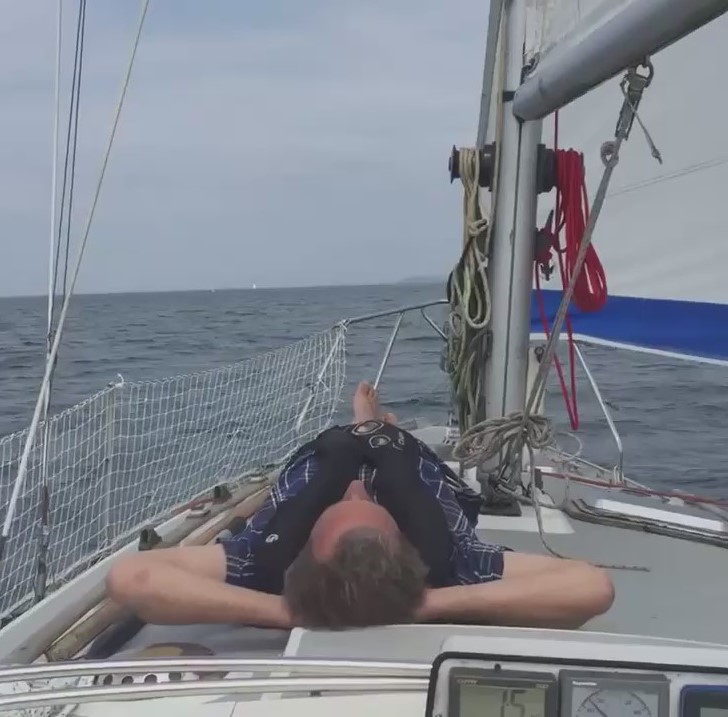
Who I am
A Journey Back Home
UNICITY is not a system of techniques.
It is an education through movement, practised with other human beings.
Movement is simply the medium. What is cultivated is attention, coordination, perception, and the efficient use of energy.
Through observation, interaction, and shared practice, people gradually learn to remove unnecessary effort and organise their movements in a more natural and efficient way.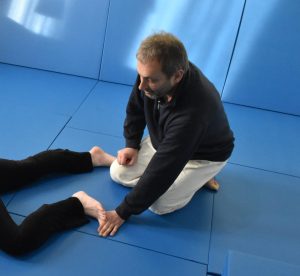
As this happens, movement becomes easier. Balance improves. Breathing becomes freer. Everyday actions require less effort.
For many people, this process feels like rediscovering something they once knew but had forgotten.
In that sense, this work can be understood as a journey back home.
How this journey began
About thirty years ago I faced a serious back injury. Like many people, I was told that I would simply have to live with it.
Instead, I decided to understand.
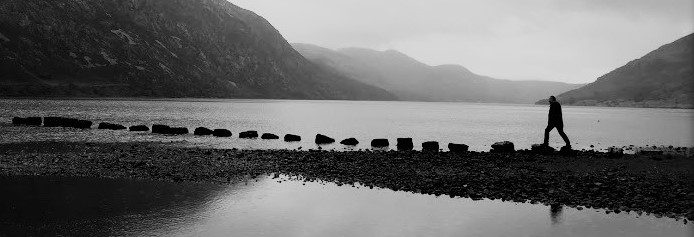
This decision led me to study the relationship between the nervous system and movement. I completed a Master’s degree in Neurology while exploring approaches that investigate how the brain and the body learn through movement.
Among these were the Feldenkrais Method, developed by physicist Moshe Feldenkrais, and Neuro Functional Reorganisation, inspired by the Padovan approach, which revisits the natural stages of human development in order to stimulate neurological organisation.
At the same time, I had experience in traditional disciplines such as Junomichi, Japanese Jujitsu, and Kyokushin Karate.
Although these disciplines are often perceived as physical activities, their original purpose is educational. They were conceived as a way to refine attention, coordination, and the intelligent use of the body throughout life.
Over time I realised that these different traditions were exploring the same question from different directions:
how to learn to use the body more intelligently.
From this exploration, the work presented in UNICITY gradually emerged.
A simple principle
I do not teach techniques.
I share a practice that I continue to apply to myself.
If one day I could no longer rely on this work in my own life, I would no longer feel it right to teach it.
My role is simply to guide this process of rediscovery.